
Image Title: Punching vs. Laser Cutting
Punching and laser cutting create openings by different mechanisms. Punching shears sheet with a punch and die; laser cutting uses a focused beam and assist gas. Compare the required geometry, material, quantity, edges and downstream operations.
Need holes or slots manufactured to your drawing? Review our sheet metal punching services, then request a quote with the material, thickness and quantity.
Punching? It is like using a strong stamp to cut the shapes in the metal. Laser Cutting? It uses super-focused light to slice the metal with amazing accuracy. Choosing the right one really matters to your business.
Smart companies know that picking the wrong method will result in wasting money and time. If you run a small business, you need ways to make things that are fast, accurate, and do not break the bank.
At Boda, we’re good at finding the best way to make your parts. We help you decide so you can get ahead faster. Let’s see which of these methods fits what you need!
What is Punching?
What is Punching?
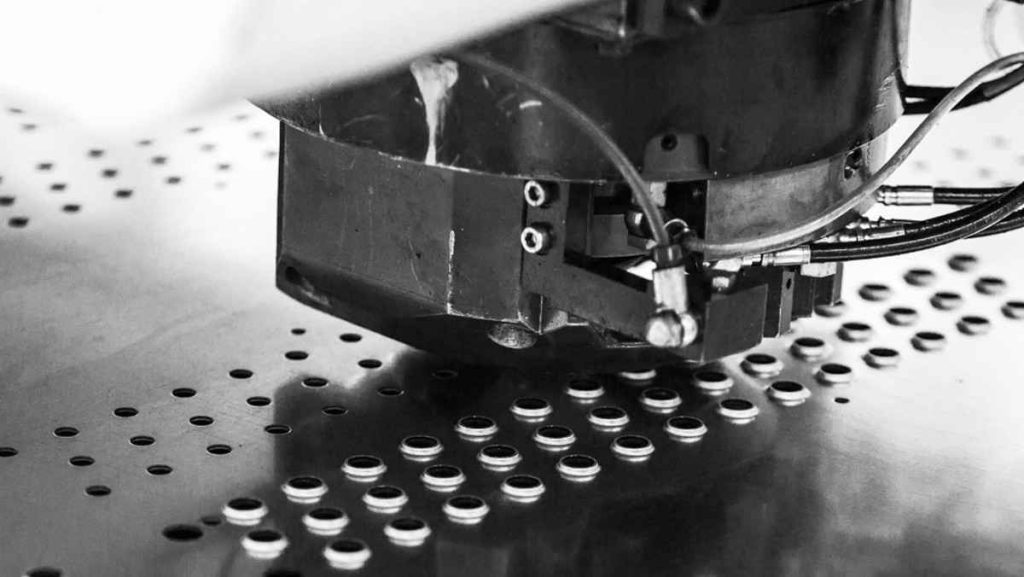
The punching removes the material from metal sheets using controlled mechanical force. A sheet Metal Punch press drives hardened steel dies through workpieces at high speeds. The process makes clean holes, slots and complex shapes in seconds.
A punch press drives the punch into the sheet while the die supports it. Deformation, shearing and fracture separate the slug; the penetration at fracture varies with material and clearance.
Press punch machine configurations range from simple single-station units to complex turret systems. Turret presses rotate multiple dies automatically, enabling rapid pattern creation without manual tool changes. CNC Control Systems positions workpieces precisely for repeatable accuracy.
What is the Punching Method?
Punching Method
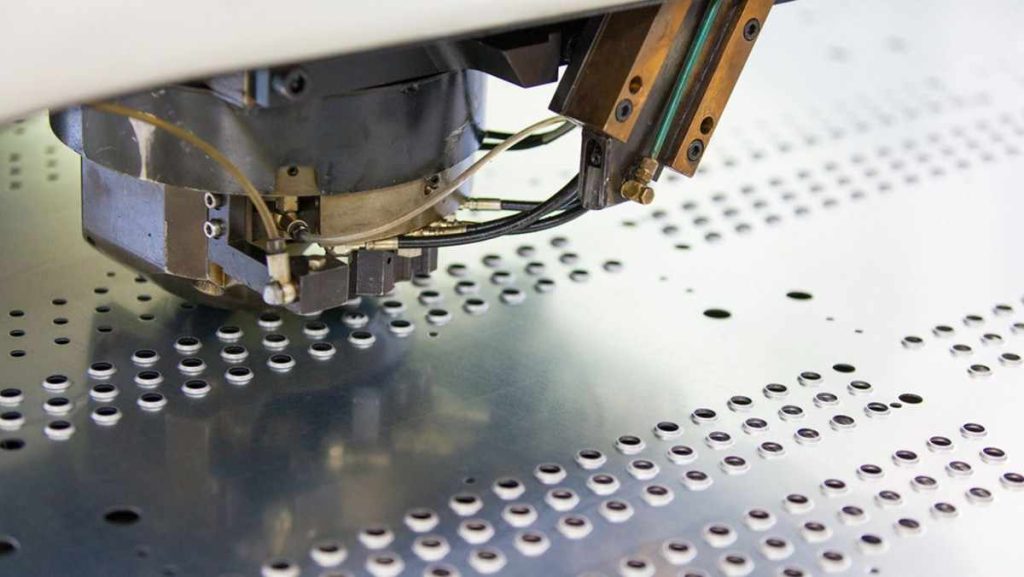
Punching removes material by shearing. The sheet is positioned relative to the selected tool pair and supported during each stroke; operating rate depends on the machine, material, stroke and part pattern.
Three separate phases mark the punching process:
- Penetration phase: The punch contacts and begins entering the material
- Shearing phase: Material fractures as the punch reaches critical depth
- Stripping phase: The punch retracts while strippers prevent material from sticking
The tool selection determines the quality and production efficiency of the hole. The fast, properly maintained dies, produces clean edges with minimum burr formation. Die clearance (difference between punch and die) should match the thickness of the material and type for optimal results.
Read More: Efficiency in Sheet Metal Punching
What are the Advantages of Punching?
Advantages of Punching
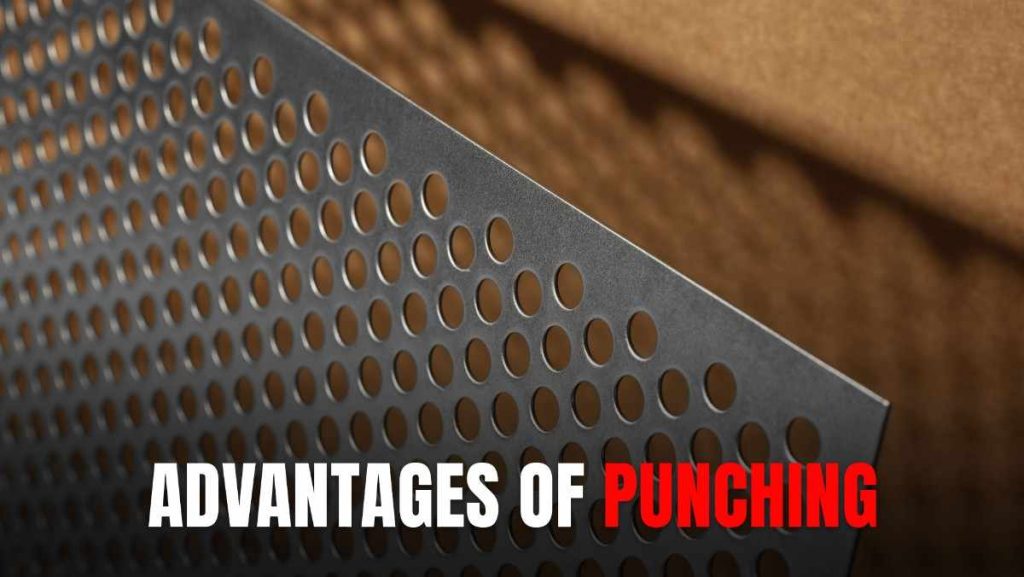
There are many strong advantages of punching that make it the best option for some jobs. Here are the main benefits:
- Repeated holes can make punching worth evaluating when suitable tools are available. Actual throughput depends on tool selection, hit count, sheet movement and material; machine strokes per minute cannot be compared directly with laser travel speed.
- Setup and tooling costs are spread across the order quantity. The total cost still includes sheet utilization, slug and skeleton scrap, deburring, forming and inspection.
- Compatible special tooling can form louvers, embossments or other features on some punch presses. Tool and machine compatibility must be confirmed; these operations are not included automatically in a punching service inquiry.
- Punching is mechanical rather than a thermal cutting process, but force and repeated hits can still distort sheet and create burrs. Specify critical hole dimensions, flatness, edge condition and the final inspection state.
For a part-supply inquiry, review sheet metal punching services. Tooling, material, quantity and acceptance requirements are reviewed for the individual project.
What are the Disadvantages of Punching?
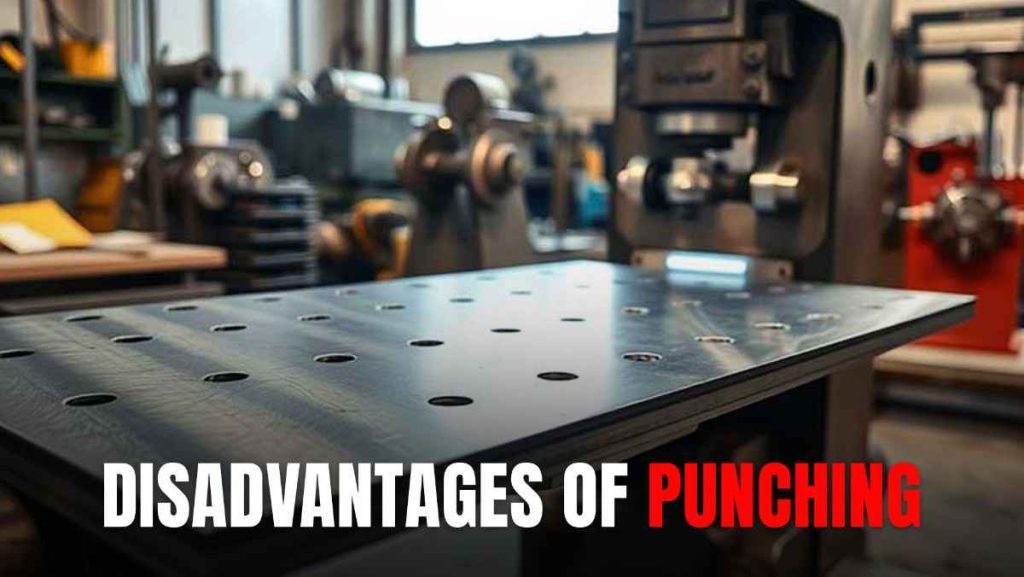
Disadvantages of Punching
Even though there are many good points in pressing and punching, it also has some limitations that you need to think about. Let’s see them:
- A nonstandard opening may need special tooling, trials or another cutting route. Compare the quoted tool investment and finished-part price at the actual demand rather than relying on a generic tooling-price range.
- Thickness feasibility depends on material strength, cut perimeter, hole size, tool guidance, clearance and press capacity. Confirm the specific grade and geometry rather than applying a blanket thickness range.
- The edge of the punched metal is not always smooth. The result depends on the type of metal and how fast the tool is. Some metals may have rough edges or cracks, which means that you may require additional work, such as deburring, to clean them.
- Small-hole feasibility depends on diameter relative to thickness and on the material and tool guidance. Some guided tools can pierce holes smaller than the sheet thickness; this is a tooling-specific capability to assess, not a general guarantee.
What is Laser Cutting?
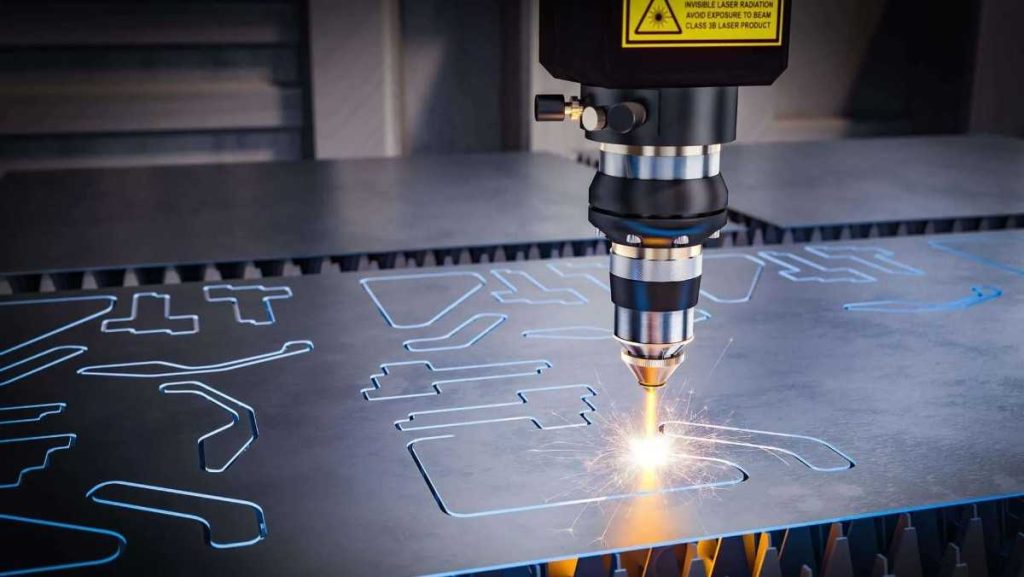
Laser Cutting
Laser cutting uses strong, focused light to melt, burn or turn into a gas with planned lines. The laser beam is made too small to cut with high accuracy, and causes slight heat damage in nearby areas.
CO2 lasers are usually used to cut sheet metal. They produce infrared light with a 10.6 micrometer wavelength. But now, fiber lasers are becoming more popular because they make better cuts and use energy more efficiently.
The cutting process does some things at once. The laser heats the metal until it melts or turns into gas. Then, special gases like oxygen, nitrogen, or air blow the melted metal out of the cut. CNC machines transform the laser head with accurate routes to fully follow the design.
Laser-cutting thickness capacity is machine-, power-, material- and quality-specific. Specify the alloy, thickness and edge requirements for a feasibility review.
Try Boda Now!
Understanding the Laser Cutting Process
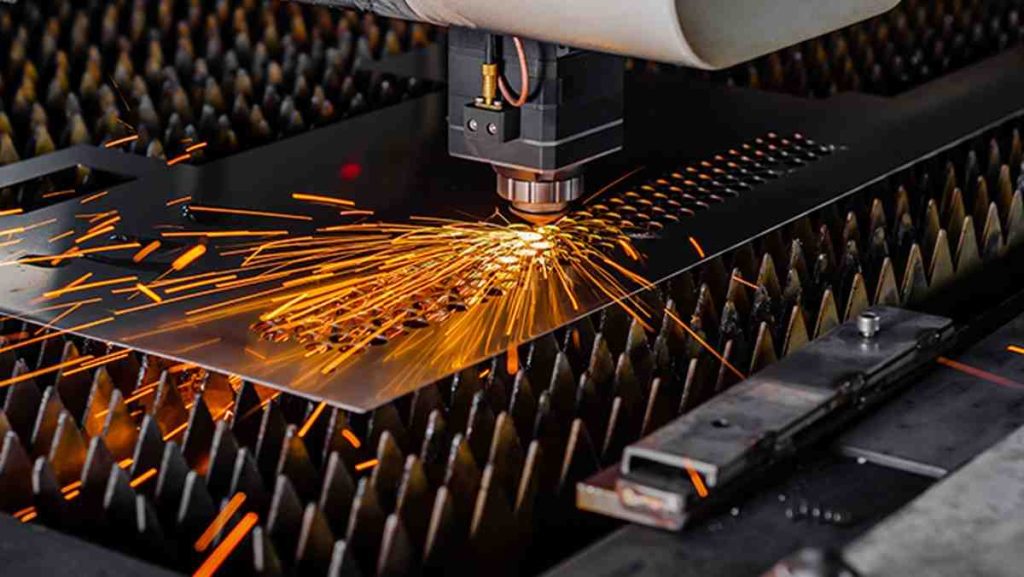
Laser Cutting Process
Laser cutting begins with computer-aided design (CAD) file preparation. Nesting software arranges parts optimally on sheet material to minimize waste. CNC programming converts geometry into machine-readable instructions.
Beam delivery and focusing optics direct laser energy to the cut. Focus settings and beam characteristics depend on the laser source, head, material and thickness.
The motion system follows the programmed contour. Positioning specifications alone do not establish finished-part tolerance, which also depends on the cut process, material and measurement conditions.
Process monitoring ensures consistent cut quality. Sensors detect breakthroughs, monitor assist gas pressure, and track beam alignment. Automatic height control maintains optimal focal position as material thickness varies.
What are the Advantages of Laser Cutting?
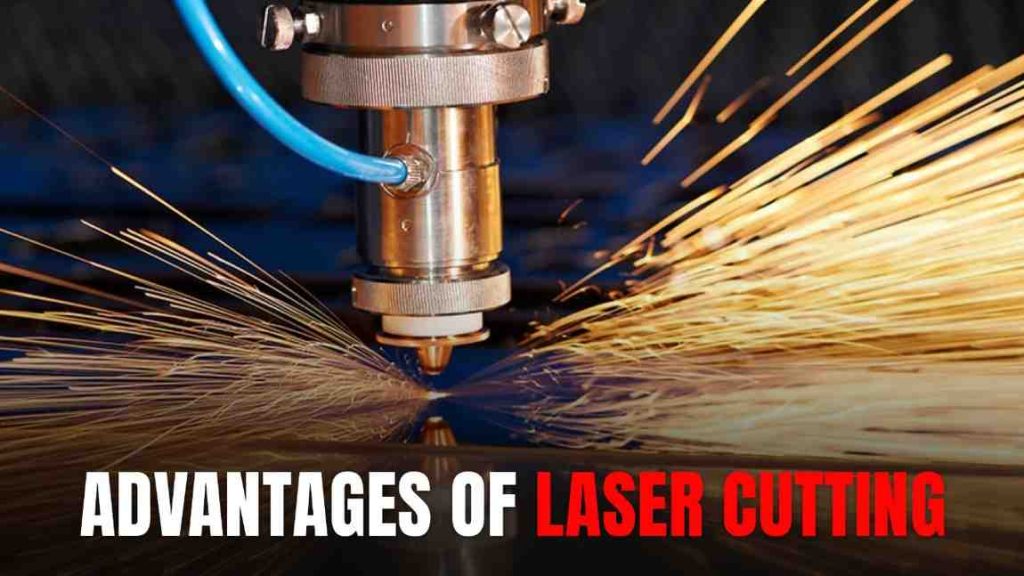
Advantages of Laser Cutting
Laser cutting is known for its high accuracy and clean results. It provides many benefits for modern manufacturing. Let’s have a look:
- Laser cutting can follow detailed contours without a shape-specific cutting die. Achievable tolerances, kerf, taper and edge quality depend on the machine, material, geometry and process settings.
- CAD and program changes can support design revisions without a new shape-specific cutting die. Programming, material, setup and sample approval still affect the schedule.
- Laser compatibility depends on the source, material and cutting system. This comparison concerns metal sheet; plastics, ceramics and composites require a separate compatibility and safety review.
- Laser-cut edges may need dross removal, oxide removal or other finishing depending on material, assist gas and acceptance criteria. The heat-affected edge and any taper must be considered.
- Laser cutting avoids wear on a contacting shape-specific cutting die, but optics, nozzles, protective windows and the cutting system still need maintenance.
What is the Main Disadvantage of Laser Cutting?
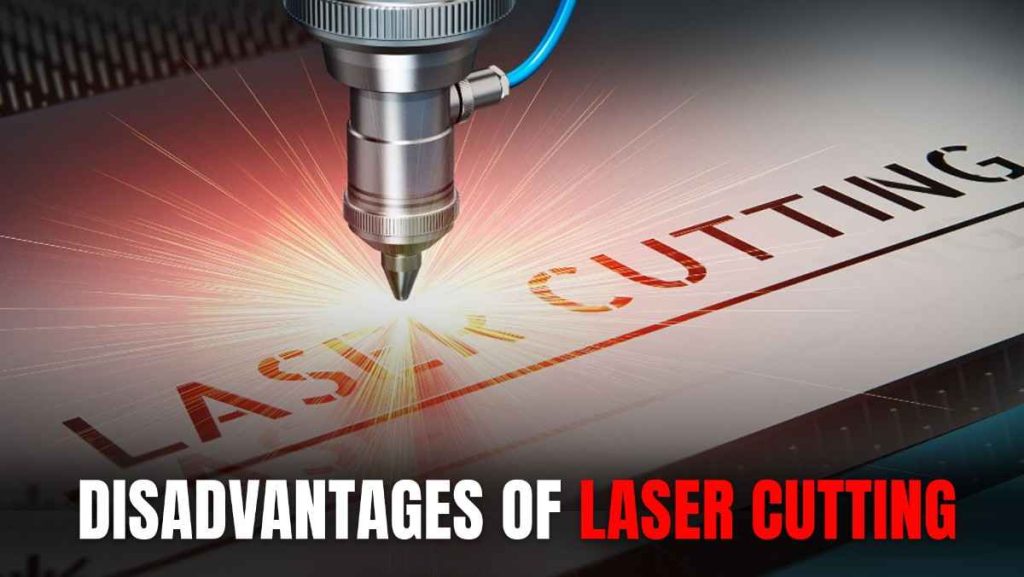
Disadvantages of Laser Cutting
Laser cutting is known for accuracy, but it also comes with some shortcomings. These issues can affect production time, cost and material options.
- Relative throughput depends on geometry, hole count, sheet movement, laser cutting conditions, tool selection and secondary work. Neither route is always faster.
- The cost of a laser cutter is high due to high electricity use and regular care requirements. Parts such as laser tubes, lenses and mirrors wear out and should be replaced. The use of support gases such as nitrogen or oxygen also adds to the cost. Choosing the right type of laser machine can greatly affect how much you spend to run it.
- Laser cutters also withstand the limitations of the thickness of the material. These boundaries depend on the power of the laser and the type of metal. Shiny materials such as aluminum and copper reflect the laser beam, making them difficult to cut. Thicker pieces may need extra passes or special equipment to cut properly.
- Another issue is the heat produced during cutting. This heat replaces the metal near the edge, which can affect how the part works. Some projects may require additional stages to clean or fix these heat-affected areas.
What is the Difference Between Cutting and Punching? – Comparison Table
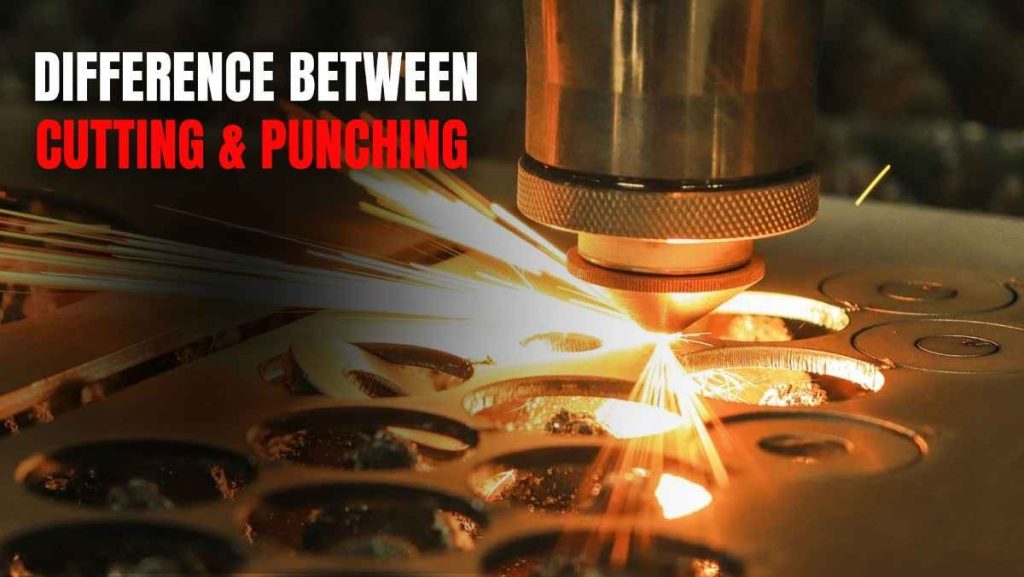
Difference Between Cutting & Punching
The main difference between punching vs laser cutting is how they remove the material and the type they leave behind.
The punching takes the metal out using strong mechanical force, which cuts the material by shearing it. It creates a special edge with both smooth and rough areas. Metal pieces, called slugs, are fully pushed out of the main sheet.
Cutting, especially with lasers, removes the metal using heat. The laser melts or converts the metal into gas along the cutting line. It makes a smooth, narrow cut called a kerf and releases the heat-affected edge. Unlike punching, the material is removed from the way a flowing manner, allowing the laser to follow complex shapes that cannot be done with punching.
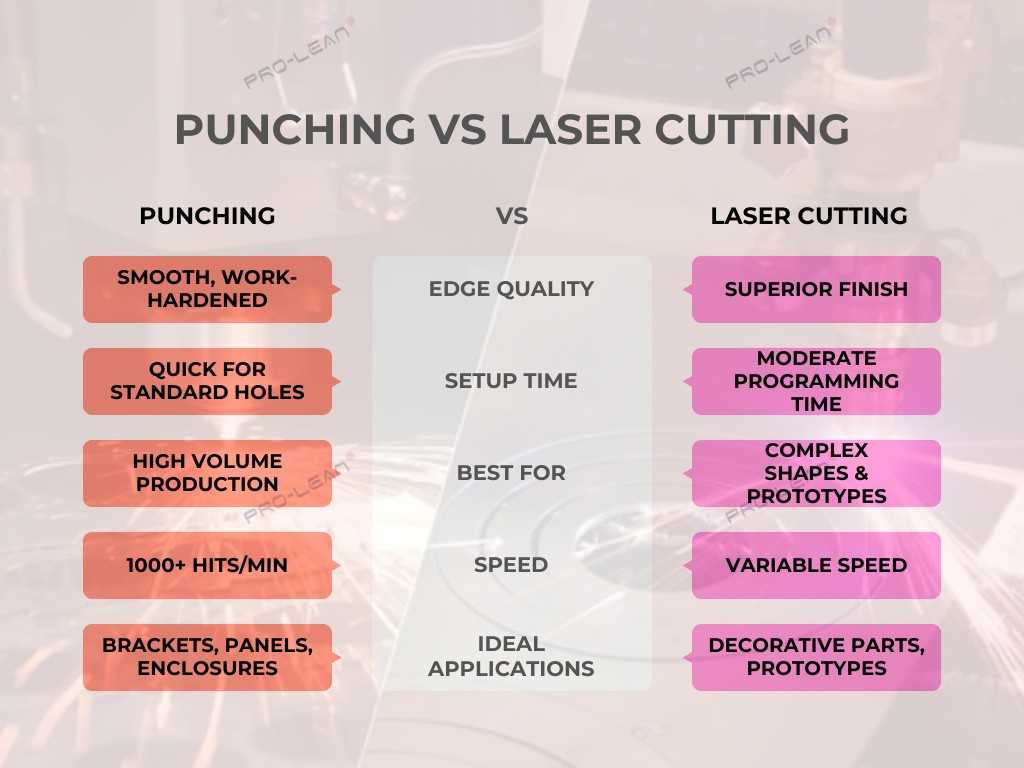
Image Title: Punching vs Laser Cutting Infographic
Here is the comparison table between punching and laser cutting:
| Decision factor | Punching | Laser cutting |
|---|---|---|
| Cutting mechanism | Mechanical shearing with a matched punch and die | Thermal cutting using a focused beam and assist gas |
| Geometry | Tool-defined holes, slots and repeat patterns | Programmed profiles and openings within process limits |
| Tooling | Existing shape tools or special tooling | No shape-specific cutting die; programming and setup remain |
| Quantity and cost | Review tool investment, hits, nesting and secondary work | Review cutting time, gas, nesting and secondary work |
| Accuracy and capacity | Confirm for grade, thickness, geometry, tooling and inspection | Confirm for grade, thickness, geometry, machine and inspection |
| Edge and flatness | Rollover, fracture, burr and mechanical distortion need review | Kerf, taper, dross, oxide and thermal effects need review |
From a manufacturing perspective, punching excels in creating discrete features like holes and simple shapes at high speed, while cutting processes offer superior geometric flexibility for complex contours and intricate details.
Try Boda Now!
Which One to Choose: Punching vs Laser Cutting?
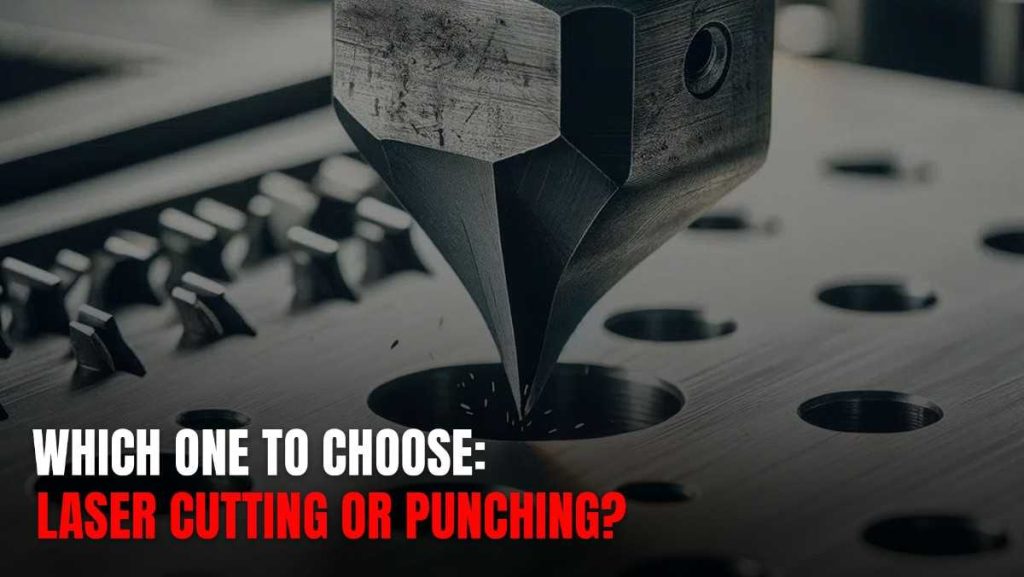
Which One to Choose: Laser Cutting or Punching?
The selection between punching and right laser cutter depends on the needs of your project. Things such as the volume, size complexity, material type, and overall costs play an important role.
1. Quantity of Production
Repeated demand can justify tool investment, but there is no universal order-quantity cutoff between punching and laser cutting. Compare the actual pattern and finished-part cost at the requested quantities.
2. Based on Size and Design
The size of your part also matters. Punching works great for simple holes and basic shapes. If your design has complex lines, fine details, or requires tight accuracy, then laser cutting is a better option.
3. Material Type
Review the exact alloy, thickness, surface condition and required features for both routes. Reflectivity and thermal behavior affect laser process selection; strength, geometry and tooling affect punching.
4. On the Basis of Cost and Efficiency
To find the best value, see the total cost – not only machine time. Punching may require special equipment, and the setup takes time. Laser cuttings may slow down, but require less additional steps. Better option depends on the exact requirements of your job.
At that point, our experts at Boda can help you to decide the right cutting method according to your project needs.
What is the Difference Between a Cut and a Smash Cut?
Difference Between a Cut and a Smash Cut
The cutting operation completely takes the material away, causing holes or partition parts. Both punching and laser cutting are genuine cutting methods as they remove material from metal pieces.
“Smash cut” is not a useful specification for selecting a sheet-metal manufacturing route. Specify a pierced opening, blanked profile, lanced tab or formed feature on the drawing instead.
Cutting and forming change a part in different ways. Assess edges, remaining section, loads and any deformation for the actual design; neither a cutting label nor a forming label establishes component strength.
Advanced Metal Fabrication Solutions for Industry Leaders
Today’s factories often require both punching and laser cutting. To meet the needs of various customers, smart manufacturers use more than one method. This helps them serve all kinds of orders better and faster.
1. Both Punching and Laser use together
Some companies use a mixture of both methods. First of all, they quickly use punching to make normal shapes and holes. Then, laser cuttings are used for wide or difficult designs. This smart mix saves time and adds more options.
2. Connecting with Other Processes
These cutting methods do not work alone. They are part of a large system including bending, welding and surface finishing. For example, punching can be used first, then laser cutting makes a smooth finish. This creates the shapes that a method cannot do alone.
3. Keeping Quality High
Good companies use quality checks during both cutting methods. They use systems such as statistical process control (SPC) to see major settings during punching and laser cutting. This helps them to fix any problem quickly and keeps all parts as per the requirement.
4. Selecting the Correct Technology Matters
Experts in sheet metal punching, like Boda, know that choosing the right method affects your entire production process. It is not just about cutting – it’s about how everything works smoothly together.
Boda’s sheet metal hole punching specialists understand that technology selection impacts your entire production workflow.
Why Choose Boda?
Why Choose Boda?
Review sheet metal punching services for hole- and slot-focused parts, or laser cutting services for a programmable contour route. The drawing, material, demand and acceptance requirements determine the project scope.
Our skilled team helps you choose the best process for your needs. They carefully study your designs and suggest the most cost-saving method. This specialist advice helps you to save both time and money on every project.
Agree critical dimensions, edge condition, flatness, inspection methods and documents in the quotation. A quality-management-system certificate does not guarantee every part or establish a universal product tolerance.
If samples are needed, define their purpose, quantity and acceptance criteria. Confirm the sample route and schedule separately from repeat-production requirements.
Conclusion – Punching vs Laser Cutting
Punching merits evaluation for repeated tool-defined holes and patterns. Laser cutting merits evaluation for flexible contours and changing geometry. Compare tooling, finished-part cost, edge condition, flatness and downstream work; neither route has a universal accuracy, cost or speed advantage.
The best option depends on how many parts you need, how complicated the sizes are, and your budget. Many smart manufacturers use both methods based on the job. A mixture of punching and laser cutting can give you the best results.
Send the drawing, material, quantity and critical requirements through the quote page so the proposed route and secondary operations can be reviewed together.
Get Your Quote Today!
FAQs
What are the Benefits of Punching Over Laser Cutting?
Repeated openings may favor punching where appropriate tools and sequence reduce the total cost. Mechanical punching avoids a thermal cut but can still cause burrs, local work hardening and distortion. The decision requires the actual part and quantity.
What are the Benefits of a Punch Cut?
Punching creates repeatable tool-defined openings, but the sheared edge can include rollover, burnish, fracture and an exit burr. Sheet deformation and any deburring requirements must be assessed for the finished part.
What is the Process of Punching and Cutting?
The sheet is positioned and supported between a punch and die. The punch deforms and shears the material, the slug separates, and the tool retracts while stripping releases the sheet. Fracture depth depends on material and tooling clearance.