
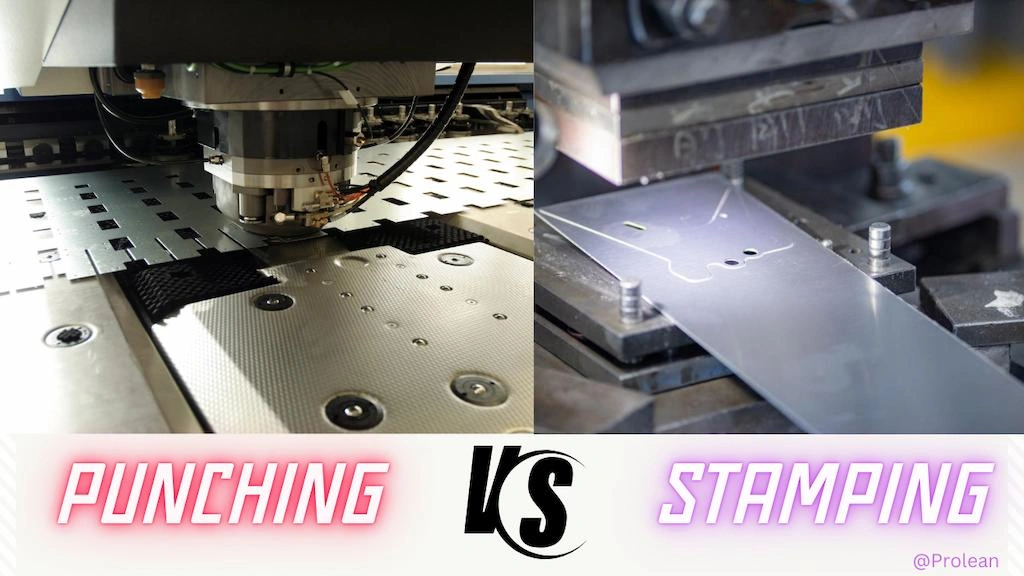
Punching creates openings by shearing material with a punch and die. Stamping is the broader family of press operations and can include punching, blanking and forming. The procurement choice is between specific production routes, rather than two mutually exclusive processes.
Need holes or slots manufactured to your drawing? Review our sheet metal punching services, then request a quote with the material, thickness and quantity.
In this article, we will elaborate on what is metal punching, what is stamping, their key differences, considerations for choosing between them, and some application examples.
Let’s start it!
What is Sheet Metal Punching?
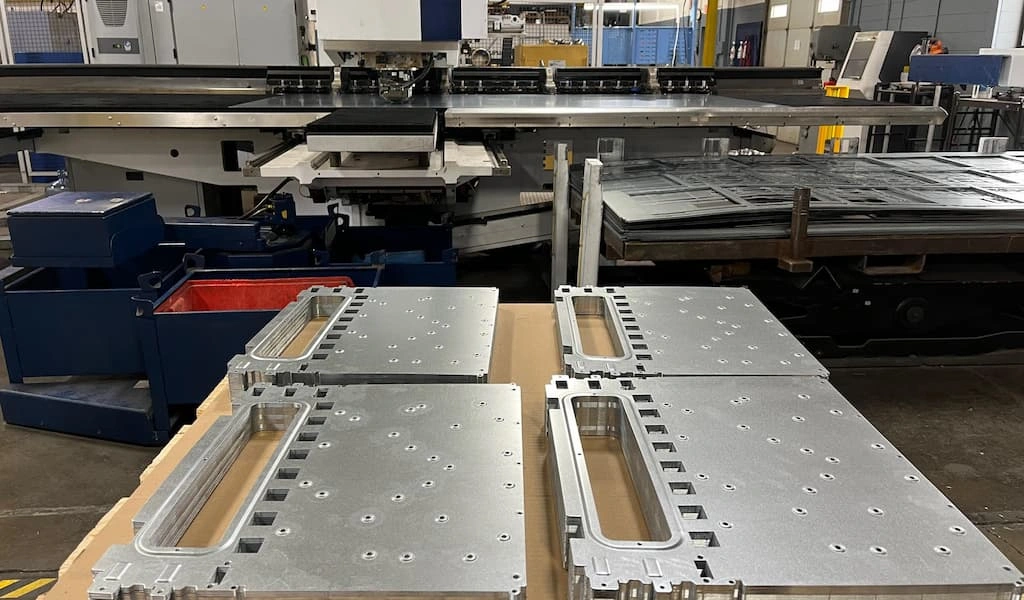
Metal punching
Punching is a simple but critical process in fabrication. It is used to make holes and simple cut-outs in metal sheets. The holes can be cylindrical, square, rectangular, or custom-shaped based on the cross-section of the punch surface. As the punch descends downwards, it shears the sheet and leaves the scrap, whereas the die supports work. Moreover, the cutting lines on the metal sheets are easily visible.
A programmed punching route can automate repeated hole locations and tool selection. Whether holes are made individually or with a cluster tool depends on the tooling and pattern.
Mild steel, stainless steel, aluminum, copper and brass can be evaluated for punching. Feasible thickness and hole geometry depend on grade, strength, tool guidance, clearance and press capacity.
Try Boda Now!
What is Metal Stamping?
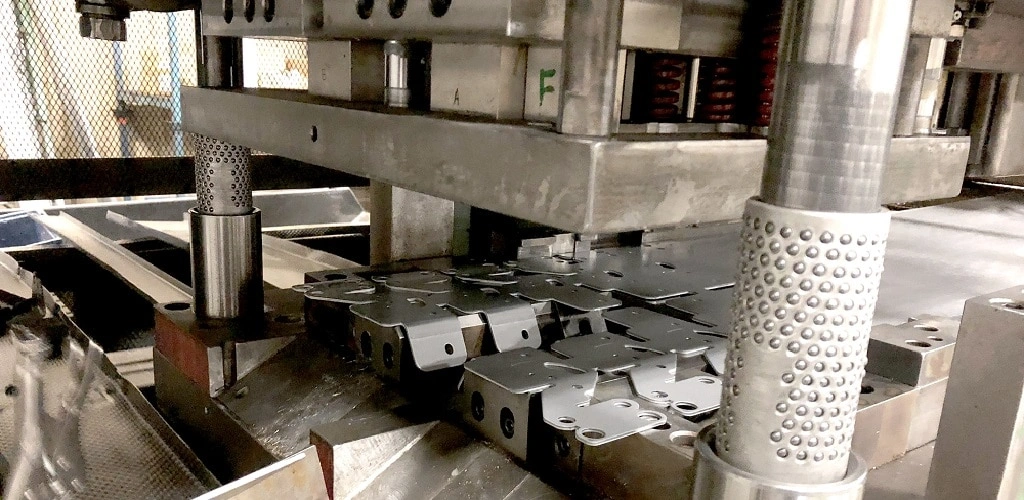
Sheet metal stamping
Metal stamping is a border term; the process is not limited to hole creation. It can make very complex sheet metal parts, such as car fenders, intricate electrical enclosures, and mounting brackets.
The sheet metal stamping process involves deforming metal sheets into the desired shape through a series of cold-forming techniques. Metal sheets are fed into a stamping press, where the die surface holds the sheet, and punches transform into the designed shape.
Stamping typically includes four different forms of fabricating operations: forming, blanking, drawing, and piercing.
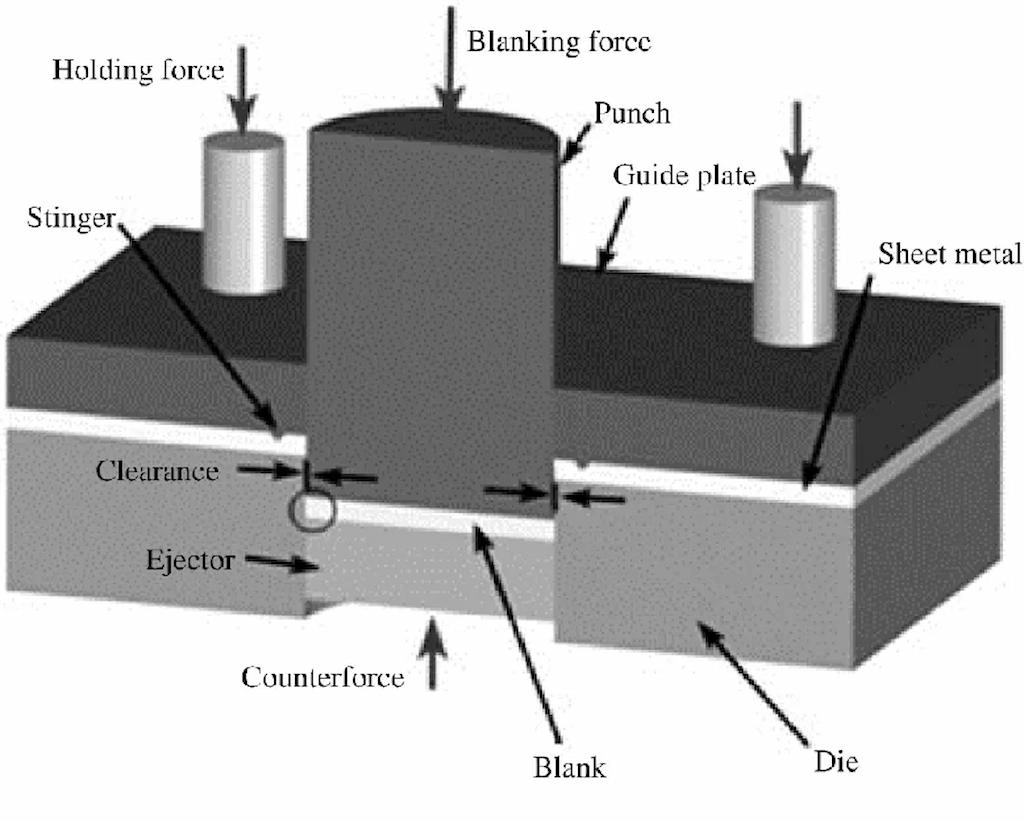
Stamping process diagram
Forming deforms sheet without necessarily removing material. In blanking, the cut-out blank is retained; in piercing, the surrounding sheet is retained and the removed slug is scrap. Drawing uses controlled material flow into a die to create a hollow form.
Depending on the complexity, custom metal stamping involves one or more number of these operations to create the part strictly to design.
Key Differences Between Punching and Stamping
Let’s discuss the difference between stamping and punching in various aspects, including working mechanism, complexity, tooling, and cost.
Working Mechanism
First, how to punch a hole in metal? It involves a punch and die in between the worksheet is placed. Then, the punch descends and shears the material to make a hole that matches the shape of the punch. This is mainly useful for making holes or simple cutouts on sheet metal.
Metal Stamping, as the term implies, involves more than that. Beyond punching holes, operations like bending, embossing, and flanging fall under metal stamping.
Shape and Complexity
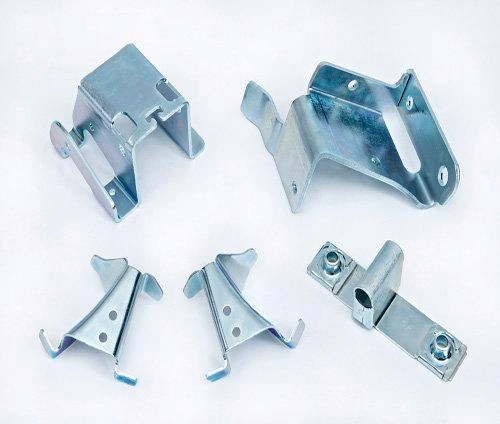
Complex metal stamping parts
The punching process provides accurate results but hole shapes are limited by the shapes of the punch and die. On the other hand, sheet metal stamping specializes in producing complex forms and shapes. It can perform various operations at once. For example, stamping can perform bending, punching, and piercing.
Required Tools
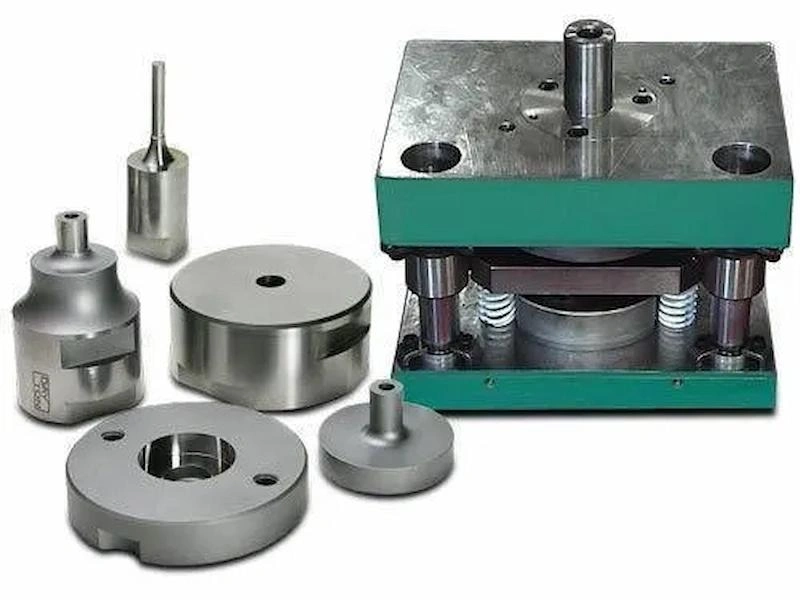
Metal punching die
Sheet metal piercing normally uses a punch press with matched punch-and-die tooling. A press brake is primarily a bending machine. Standard shapes may use existing tools; dedicated stamping dies are evaluated when the geometry and repeat demand justify them.
Cost Considerations
Punching may be economical for repeated openings when suitable tools are available. Compare setup, hit count, material yield, special tooling and secondary work for the actual quantity; there is no universal tooling price range.
Dedicated stamping tooling can require a separate development and trial investment. The quotation should distinguish tooling cost from finished-part price and account for design changes and lifetime demand.
Accuracy and Precision
Neither punching nor stamping has one guaranteed tolerance. Material, geometry, clearance, tool wear, datums and the inspection condition determine achievable dimensions.
Thickness Capability
Thickness capacity must be assessed with the exact material, part size, cut perimeter, tool guidance and press force. Do not transfer a published thickness limit between machines or processes.
Punching vs Stamping: Industrial Applications
Punching parts are popular in automotive brackets, medical equipment building, home appliances, etc.
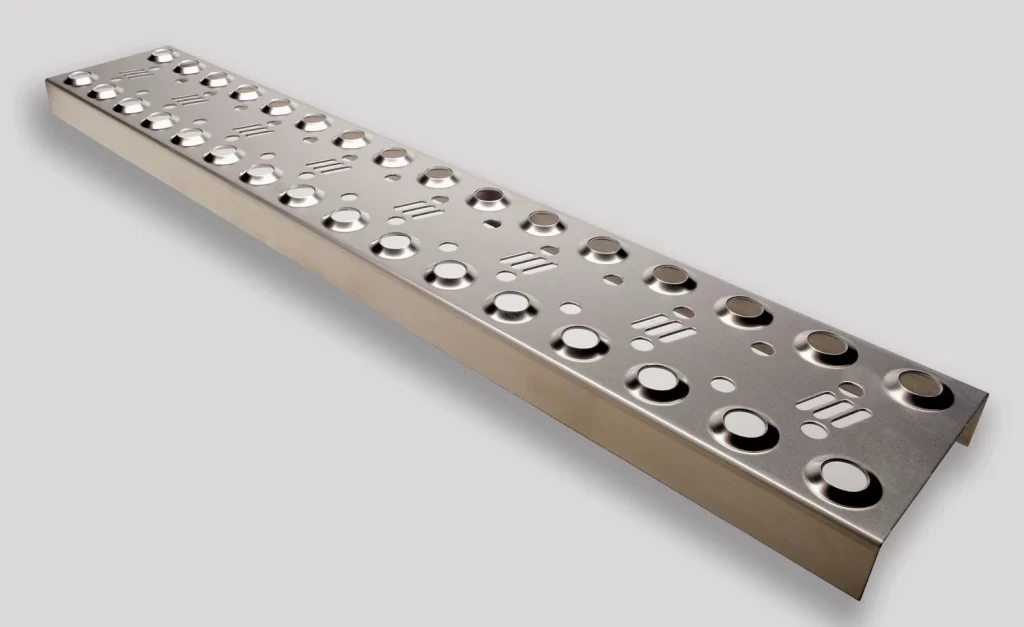
Sheet metal punching part
On the other hand, the stamping process has more diverse uses in industrial manufacturing, such as intricate panels for cars, enclosures for electronics, custom mounting fixtures, and many more.
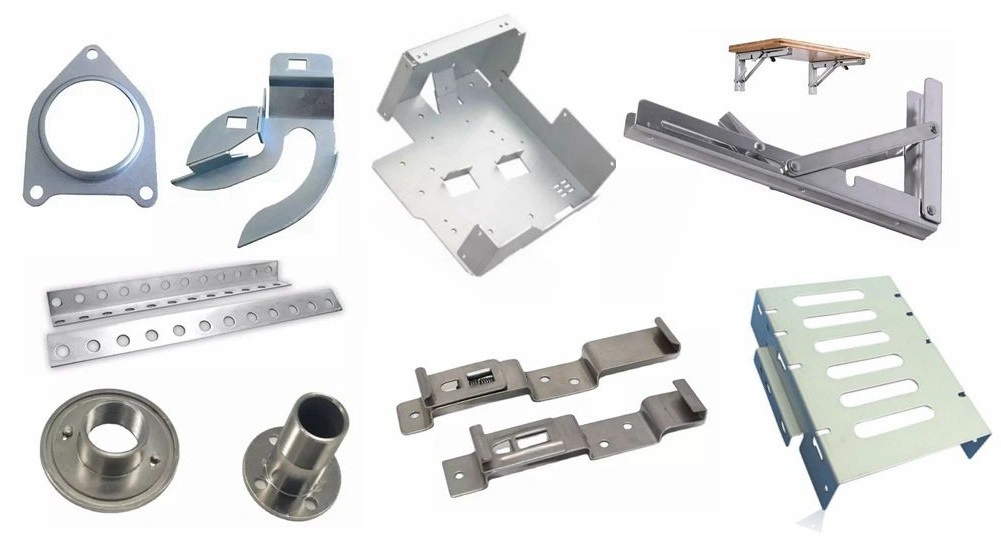
Sheet metal stamping parts
The table below outlines common application examples of stamping and punching in different industrial manufacturing sectors;
| Industry | Punching Applications | Stamping Applications |
| Automotive | Mounting holes, support structures, exhaust heat shields, patterned holes. | Body & door panels, seat rails, powertrains, suspension parts, etc. |
| Electronics | Casings, cable holes, ventilation openings, circuit board holes. | Smartphone frames, heat sinks, connector shells, battery cases. |
| Appliances | Ventilation holes, assembly points, fan grille designs, handle slots | Washing machine drums, refrigerator linings, fan blades |
| Aerospace | Rivet holes, cabin pressure panels | Instrument mounts, airframe structures, seat frames, heat shields, |
| Medical | Surgical tool slots, sterilization tray vents, frame holes, | surgical clamps, stethoscope parts, assembly brackets, equipment mounts, sensor housings |
| Construction | Truss plates, metal joist brackets, connector plates, and perforated sheets. | Window frame parts, door hinges, roofing panels, fastener components, and HVAC system parts. |
Considerations When Choosing Between Stamping vs Punching
After basic concepts and key differences, let’s discuss what are the considerations you need to make while choosing between punching and stamping for your project;
- Design of Sheet Metal Part/Product
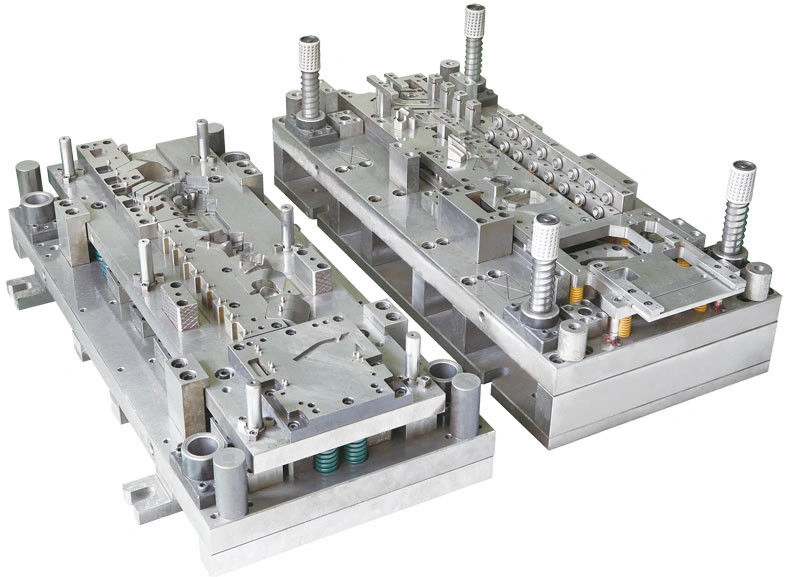
Complex metal stamping die
First, consider what Kind of Features your design includes: uniform holes and some simple forming operations like bending or intricate and multiple geometrical features. For simple designs with precise holes, punching is better. Otherwise, opt for the metal stamping method.
- Production Volume
Dedicated tooling may be difficult to justify for an unstable design or small initial order. Compare lifetime demand, setup, part cost and revision risk; there is no fixed quantity threshold for all parts.
- Project Time Line
Lead time depends on tool availability, design approval, trials, material, secondary operations and inspection. Ask for a project schedule rather than assuming that one process is always quicker.
- Material Type and Thickness
Supply the exact material grade, condition and thickness. Review cutting force, formability, tool compatibility and edge requirements for each proposed route.
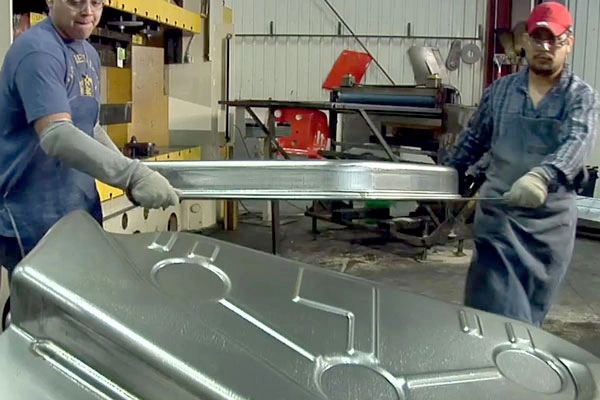
Thick metal sheet stamping
If you are looking to outsource from OEMs like China metal stamping parts manufacturers, you can discuss the criteria and considerations for whether they can match it or not—for example, production volume and expected delivery timeline.
Try Boda Now!
Summing Up
Both punching and stamping have critical fabrication capabilities, but the application preferences are different. Your best choice between punching vs stamping mostly depends on your sheet metal design and the included features in it. If you need consistent holes, use punch press press and then proceed with the worksheet and other forming operations. But for complex shapes, you must use the stamping process.
Compare sheet metal punching services for holes and slots with metal stamping services for a dedicated repeat cutting-and-forming route. Send the drawing and demand for a project-specific quotation.
FAQs
Which types of projects are best suited for stamping or punching?
Punching is suitable for making identical holes and cut-outs in sheets, but stamping is best for more diverse and complex requirements, like a part with multiple geometrical features.
From a cost-effectiveness perspective, should I choose stamping or punching?
Dedicated stamping tooling can be economical when repeat demand justifies the investment. Punching may use existing tools for some holes and slots. Compare setup, tool charges, finished-part price and revision risk for the actual order.
What is the typical lead time for punching or stamping projects?
Tool availability, material procurement, trials and approval determine lead time. Confirm the schedule for the specific tooling and finished-part scope; no standard one-week punching lead time applies.
What certifications should I look for when choosing a punching or stamping manufacturer?
ISO 9001:2015 is the certification used to verify the consistent quality management systems of manufacturers, so you must look at this before outsourcing the parts. Additionally, you also need to look at other industry-specific applications like AS9100D for aerospace, ISO 13485:2016 for medical devices, etc.