
圖片標題:沖孔與雷射切割
Punching and laser cutting create openings by different mechanisms. Punching shears sheet with a punch and die; laser cutting uses a focused beam and assist gas. Compare the required geometry, material, quantity, edges and downstream operations.
需要根據您的圖面加工孔或槽嗎?請查看我們的 鈑金沖壓服務,然後 請求報價 包括材料、厚度和數量。
沖孔? 這就像使用強力印章來切割金屬上的形狀。 雷射切割? 它利用超聚焦光以驚人的精度切割金屬。選擇合適的切割機對您的業務至關重要。
精明的公司知道,選擇錯誤的方法會浪費金錢和時間。如果您經營小型企業,您需要快速、準確且經濟實惠的方法。
At 普羅林科技我們擅長找到製造零件的最佳方法。我們幫助您做出決定,以便您更快地取得進展。讓我們看看哪種方法更適合您的需求!
什麼是打孔?
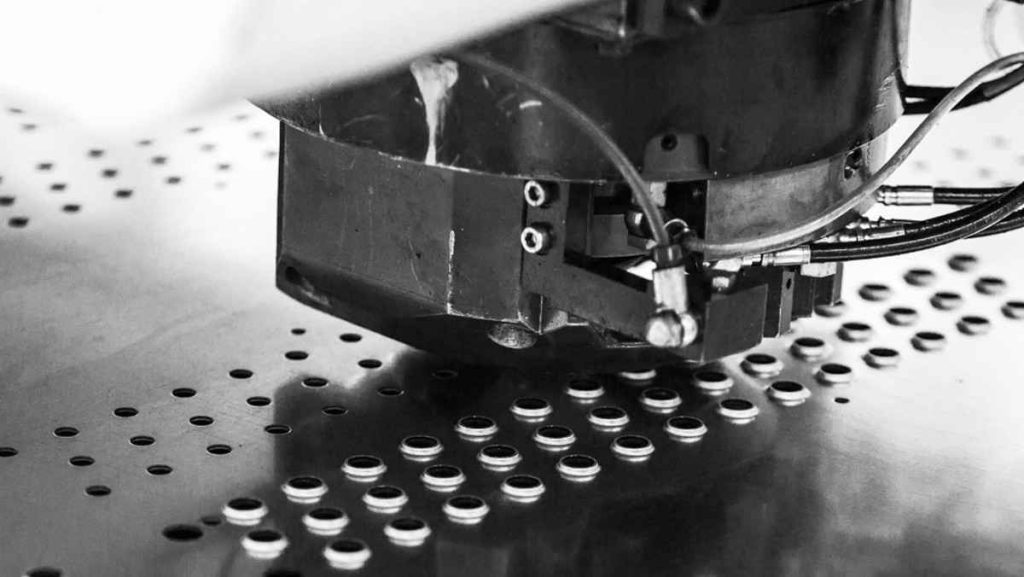
什麼是打孔?
沖孔利用受控的機械力去除金屬板材上的材料。金屬板材沖壓機驅動硬化鋼模具高速沖壓工件。此工藝可在幾秒鐘內衝出乾淨的孔、槽和複雜的形狀。
A punch press drives the punch into the sheet while the die supports it. Deformation, shearing and fracture separate the slug; the penetration at fracture varies with material and clearance.
沖壓機配置範圍廣泛,從簡單的單工位單元到複雜的轉塔系統,應有盡有。轉塔壓力機可自動旋轉多個模具,無需手動更換模具即可快速建立模型。數控控制系統可精確定位工件,確保可重複的精度。
打孔方法是什麼?
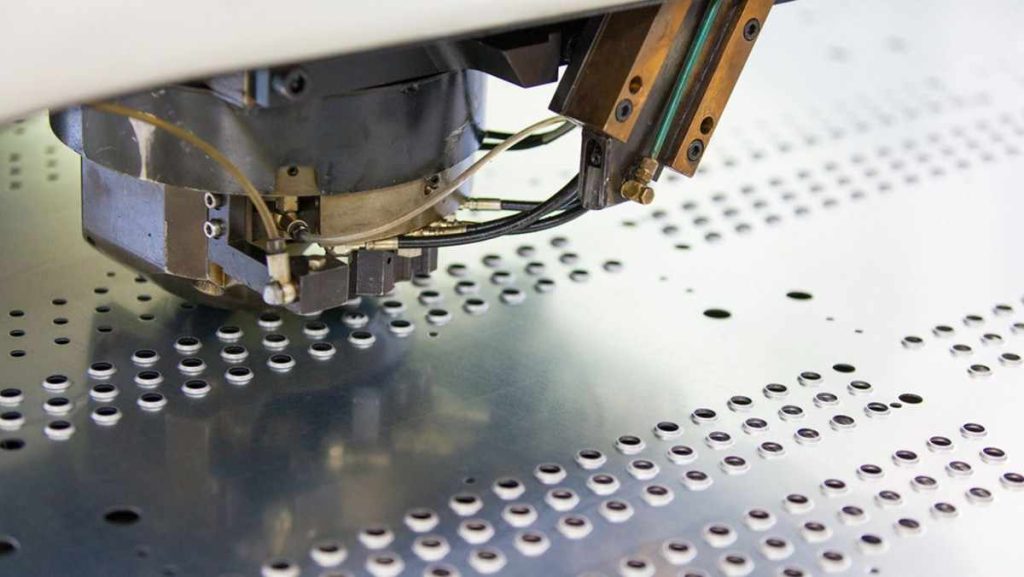
沖孔方法
Punching removes material by shearing. The sheet is positioned relative to the selected tool pair and supported during each stroke; operating rate depends on the machine, material, stroke and part pattern.
沖孔過程分為三個獨立的階段:
- 滲透階段:沖頭接觸並開始進入材料
- 剪切相:當沖頭達到臨界深度時,材料會斷裂
- 剝離階段:沖頭縮回,同時退料板防止材料沾黏
刀具的選擇決定了孔的品質和生產效率。快速且保養良好的模具可以加工出邊緣乾淨、毛邊最少的孔。模具間隙(沖頭和模具之間的間隙)應與材料的厚度和類型相匹配,以獲得最佳效果。
了解更多: 鈑金沖壓效率
沖孔有哪些優點?
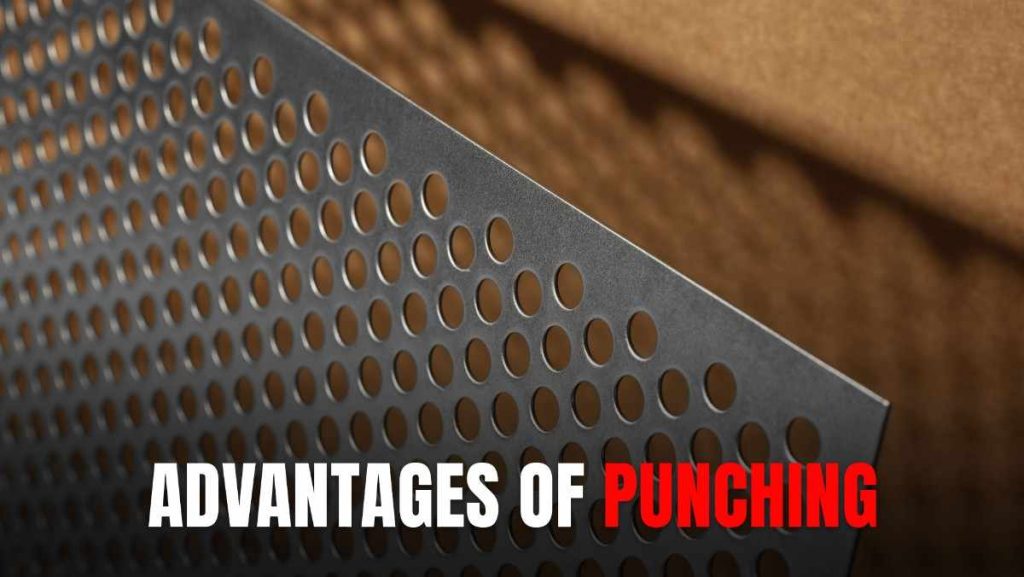
沖壓的優點
沖孔加工具有許多優勢,使其成為某些加工任務的最佳選擇。主要優勢如下:
- Repeated holes can make punching worth evaluating when suitable tools are available. Actual throughput depends on tool selection, hit count, sheet movement and material; machine strokes per minute cannot be compared directly with laser travel speed.
- Setup and tooling costs are spread across the order quantity. The total cost still includes sheet utilization, slug and skeleton scrap, deburring, forming and inspection.
- Compatible special tooling can form louvers, embossments or other features on some punch presses. Tool and machine compatibility must be confirmed; these operations are not included automatically in a punching service inquiry.
- Punching is mechanical rather than a thermal cutting process, but force and repeated hits can still distort sheet and create burrs. Specify critical hole dimensions, flatness, edge condition and the final inspection state.
For a part-supply inquiry, review 鈑金沖壓服務. Tooling, material, quantity and acceptance requirements are reviewed for the individual project.
打孔的缺點是什麼?
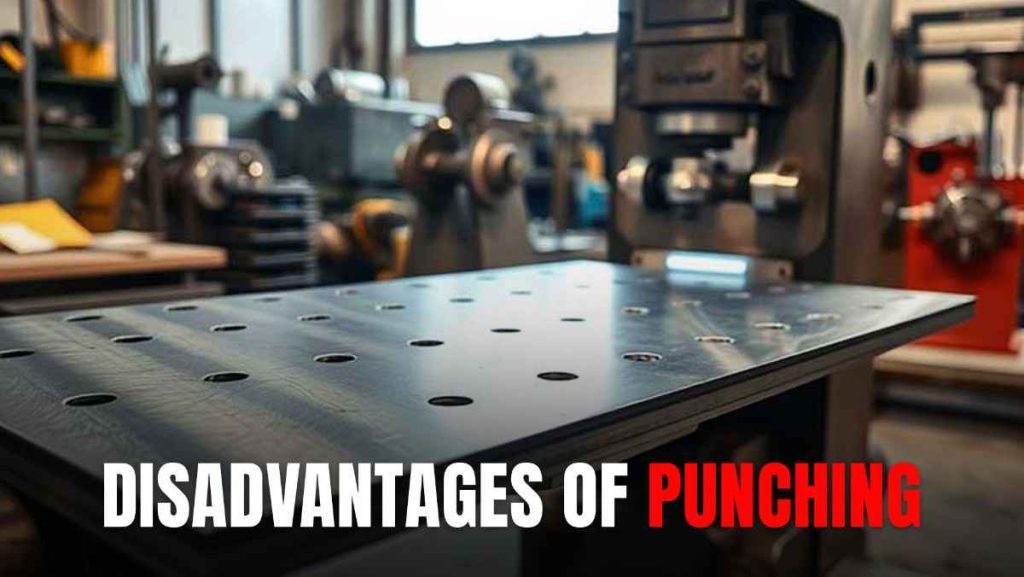
沖孔的缺點
儘管按壓和沖孔有很多優點,但它也有一些需要考慮的限制。讓我們來看看:
- A nonstandard opening may need special tooling, trials or another cutting route. Compare the quoted tool investment and finished-part price at the actual demand rather than relying on a generic tooling-price range.
- Thickness feasibility depends on material strength, cut perimeter, hole size, tool guidance, clearance and press capacity. Confirm the specific grade and geometry rather than applying a blanket thickness range.
- 沖壓金屬的邊緣並不總是光滑的。最終效果取決於金屬的類型和工具的速度。有些金屬的邊緣可能粗糙或有裂紋,這意味著您可能需要額外的工作,例如去毛刺,來清潔它們。
- Small-hole feasibility depends on diameter relative to thickness and on the material and tool guidance. Some guided tools can pierce holes smaller than the sheet thickness; this is a tooling-specific capability to assess, not a general guarantee.
什麼是激光切割?
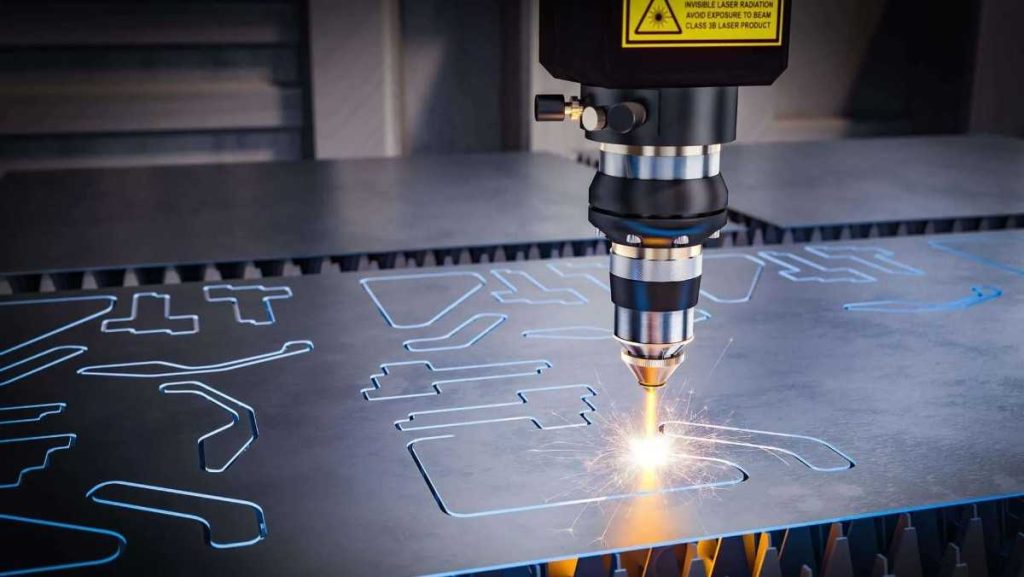
激光切割
激光切割 使用強聚焦光熔化、燃燒或轉化為氣體,形成預定的切割線。雷射光束太小,無法實現高精度切割,並且會在附近區域造成輕微的熱損傷。
CO2雷射通常用於切割金屬板。它們產生波長為10.6微米的紅外光。但現在,光纖雷射越來越受歡迎,因為它們切割效果更好,而且更有效率地利用能源。
切割過程會同時進行多項操作。雷射加熱金屬直到其熔化或變成氣體。然後,氧氣、氮氣或空氣等特殊氣體會將熔化的金屬吹出切口。數控工具機會根據精確的路徑調整雷射頭,使其完全貼合設計。
Laser-cutting thickness capacity is machine-, power-, material- and quality-specific. Specify the alloy, thickness and edge requirements for a feasibility review.
立即嘗試 Boda!
了解雷射切割工藝
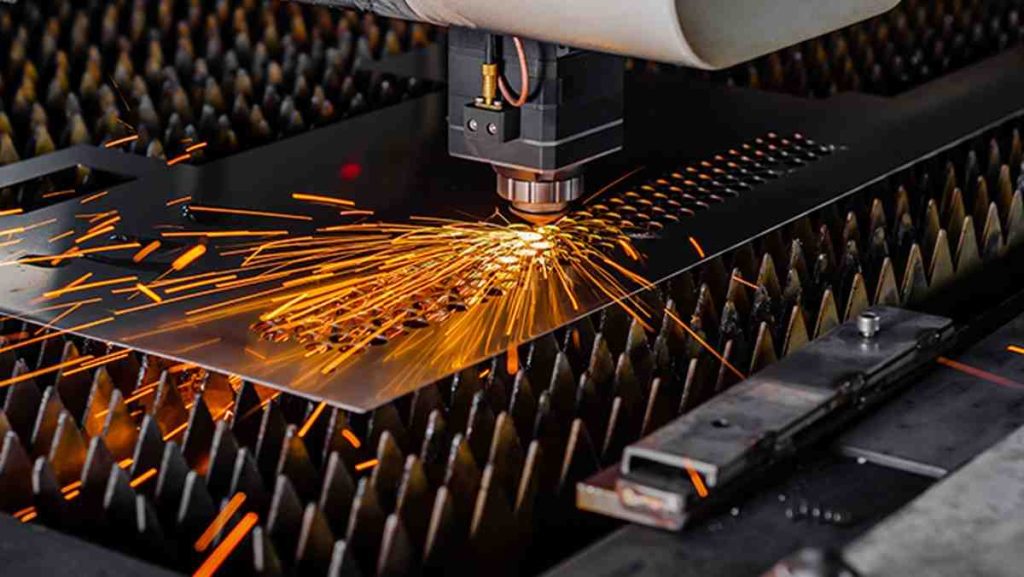
激光切割工藝
雷射切割始於電腦輔助設計 (CAD) 文件準備。排料軟體將零件在板材上進行最優排列,最大程度減少浪費。數控編程將幾何圖形轉換為機器可讀的指令。
Beam delivery and focusing optics direct laser energy to the cut. Focus settings and beam characteristics depend on the laser source, head, material and thickness.
The motion system follows the programmed contour. Positioning specifications alone do not establish finished-part tolerance, which also depends on the cut process, material and measurement conditions.
過程監控 確保始終如一的切割品質。感測器可偵測突破點,監測輔助氣體壓力,並追蹤光束對準。自動高度控制功能可隨著材料厚度的變化保持最佳焦點位置。
雷射切割有哪些優點?
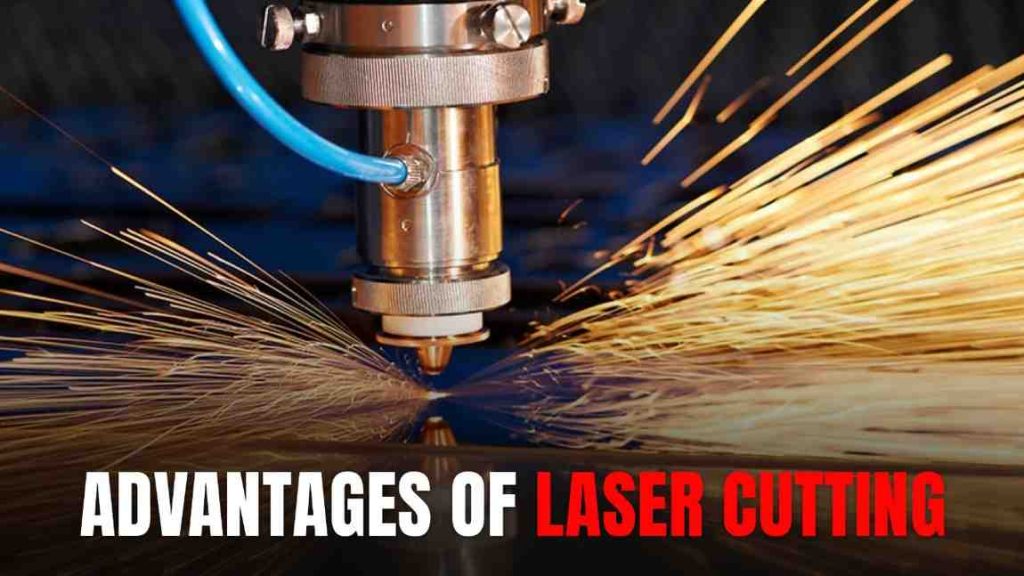
激光切割的優點
雷射切割以其高精度和清潔效果而聞名。它為現代製造業帶來了許多好處。讓我們來看看:
- Laser cutting can follow detailed contours without a shape-specific cutting die. Achievable tolerances, kerf, taper and edge quality depend on the machine, material, geometry and process settings.
- CAD and program changes can support design revisions without a new shape-specific cutting die. Programming, material, setup and sample approval still affect the schedule.
- Laser compatibility depends on the source, material and cutting system. This comparison concerns metal sheet; plastics, ceramics and composites require a separate compatibility and safety review.
- Laser-cut edges may need dross removal, oxide removal or other finishing depending on material, assist gas and acceptance criteria. The heat-affected edge and any taper must be considered.
- Laser cutting avoids wear on a contacting shape-specific cutting die, but optics, nozzles, protective windows and the cutting system still need maintenance.
雷射切割的主要缺點是什麼?
雷射切割的缺點
雷射切割以其精準度而聞名,但也存在一些缺陷。這些問題會影響生產時間、成本和材料選擇。
- Relative throughput depends on geometry, hole count, sheet movement, laser cutting conditions, tool selection and secondary work. Neither route is always faster.
- 由於耗電量高且需要定期維護,雷射切割機的成本很高。雷射管、透鏡和反射鏡等零件會磨損,需要更換。使用氮氣或氧氣等輔助氣體也會增加成本。選擇合適的雷射機類型會極大地影響您的運行成本。
- 雷射切割機也受到材料厚度的限制。這些限制取決於雷射功率和金屬類型。鋁和銅等有光澤的材料會反射雷射光束,因此難以切割。較厚的工件可能需要額外的切割步驟或使用特殊設備才能正確切割。
- 另一個問題是切割過程中產生的熱量。這些熱量會取代邊緣附近的金屬,進而影響零件的運作。有些項目可能需要額外的步驟來清潔或修復這些受熱影響的區域。
切割和沖壓有什麼區別? – 比較表
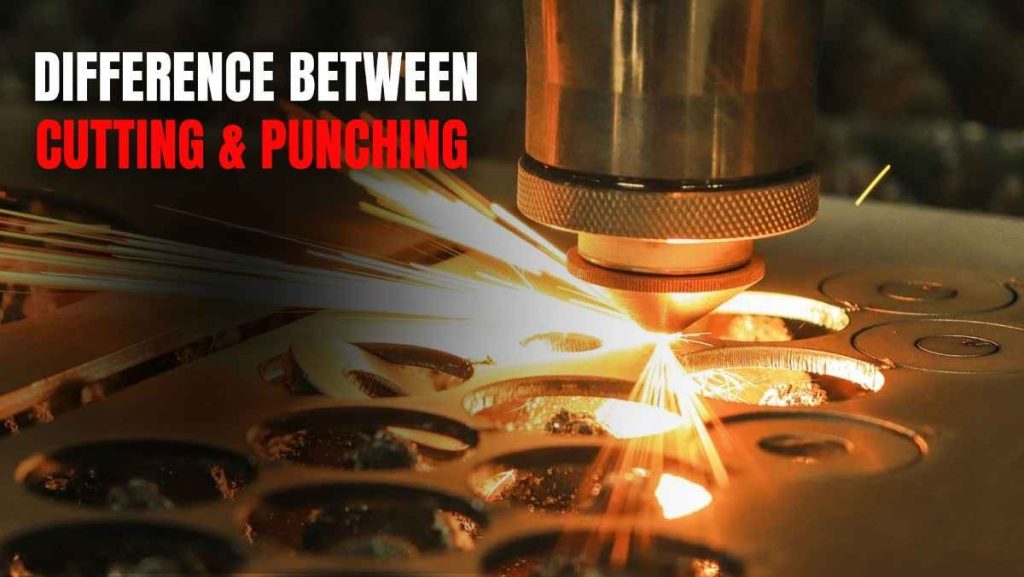
切割與沖壓之間的區別
沖壓和雷射切割之間的主要區別在於它們如何去除材料以及留下的材料類型。
沖壓過程利用強大的機械力將金屬取出,以剪切的方式切割材料。這會形成一個既有光滑區域又有粗糙區域的特殊邊緣。金屬碎片(稱為“塊”)被完全從主機板材中推出。
切割,尤其是雷射切割,利用熱量去除金屬。雷射沿著切割線熔化或將金屬轉化為氣體。它會形成一個光滑狹窄的切口(稱為切縫),並釋放受熱影響的邊緣。與沖孔不同,雷射以流動的方式去除材料,使雷射能夠加工沖孔無法實現的複雜形狀。
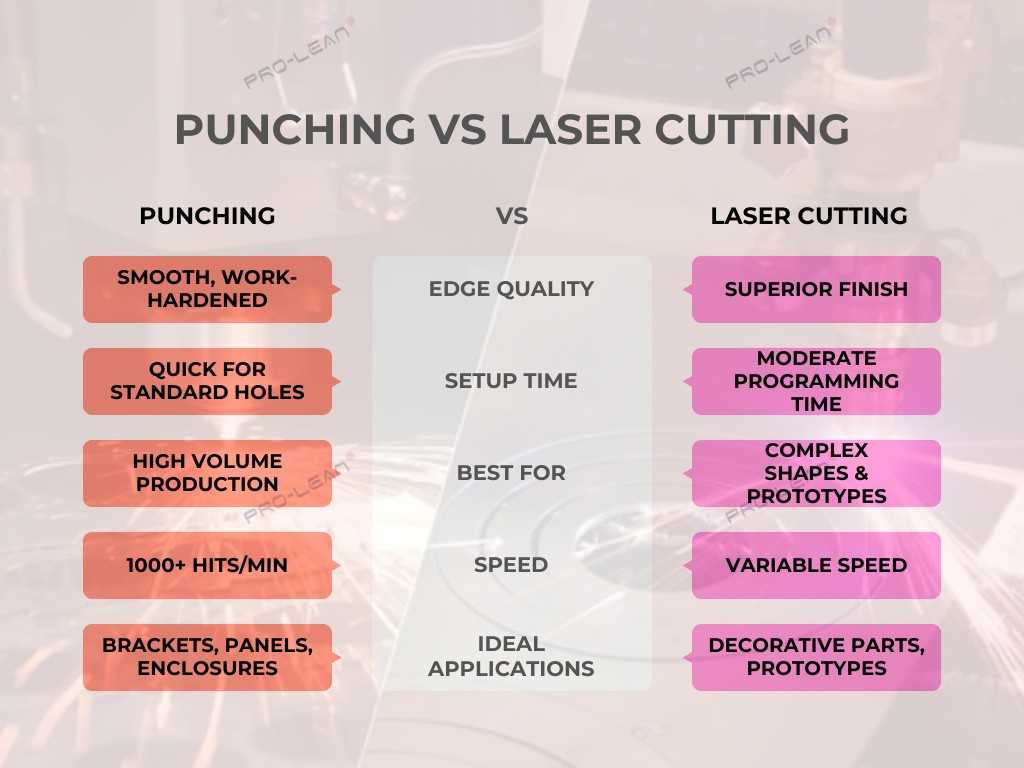
圖片標題:沖孔與雷射切割資訊圖
以下是沖孔與雷射切割的對比表:
| 決策因素 | 打洞器 | 激光切割 |
|---|---|---|
| 切割機構 | Mechanical shearing with a matched punch and die | Thermal cutting using a focused beam and assist gas |
| 幾何 | Tool-defined holes, slots and repeat patterns | Programmed profiles and openings within process limits |
| 工具 | Existing shape tools or special tooling | No shape-specific cutting die; programming and setup remain |
| 數量和成本 | Review tool investment, hits, nesting and secondary work | Review cutting time, gas, nesting and secondary work |
| Accuracy and capacity | Confirm for grade, thickness, geometry, tooling and inspection | Confirm for grade, thickness, geometry, machine and inspection |
| Edge and flatness | Rollover, fracture, burr and mechanical distortion need review | Kerf, taper, dross, oxide and thermal effects need review |
從製造角度來看,沖壓擅長高速創建孔和簡單形狀等離散特徵,而切割工藝則為複雜輪廓和複雜細節提供了卓越的幾何靈活性。
立即嘗試 Boda!
選擇哪一個:沖孔還是雷射切割?
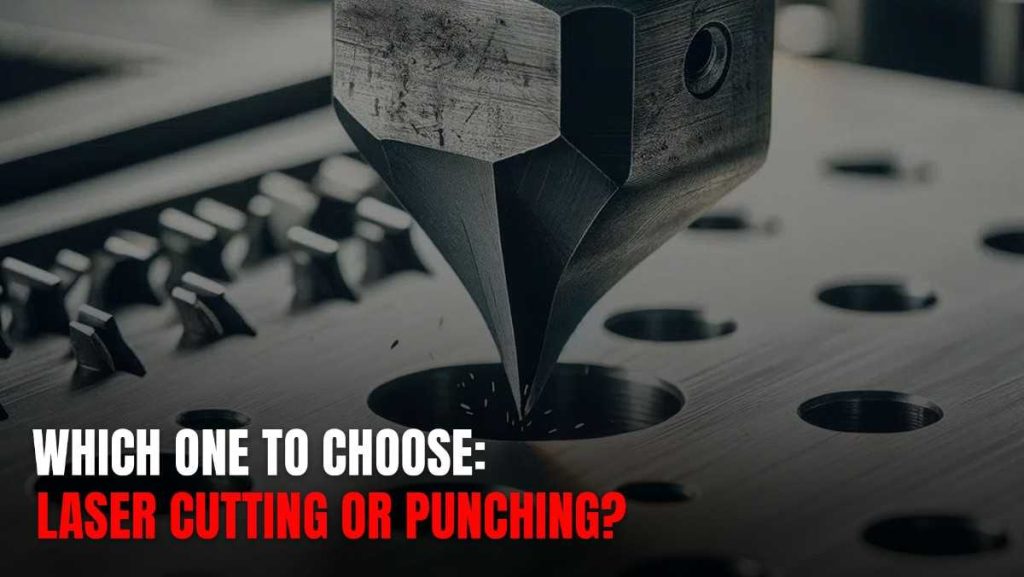
選擇哪一個:雷射切割還是沖孔?
沖孔和 右雷射切割機 取決於專案需求。體積、尺寸複雜度、材料類型和整體成本等因素都起著重要作用。
1. 生產數量
Repeated demand can justify tool investment, but there is no universal order-quantity cutoff between punching and laser cutting. Compare the actual pattern and finished-part cost at the requested quantities.
2. 根據尺寸和設計
零件的尺寸也很重要。沖孔非常適合簡單的孔和基本形狀。如果您的設計線條複雜、細節精細,或者對精度要求很高,那麼雷射切割是更好的選擇。
3. 材料類型
Review the exact alloy, thickness, surface condition and required features for both routes. Reflectivity and thermal behavior affect laser process selection; strength, geometry and tooling affect punching.
4. 基於成本和效率
要找到最佳性價比,請查看總成本——而不僅僅是機器時間。沖孔可能需要特殊設備,設定也需要時間。雷射切割速度可能會慢一些,但所需的額外步驟較少。更好的選擇取決於您的特定工作要求。
此時,Boda 的專家可以根據您的專案需求協助您決定正確的切割方法。
Cut 和 Smash Cut 有何不同?
切入和猛切之間的區別
切割操作會將材料完全帶走,從而形成孔洞或分割部分。沖孔和雷射切割都是真正的切割方法,因為它們會從金屬零件上去除材料。
“Smash cut” is not a useful specification for selecting a sheet-metal manufacturing route. Specify a pierced opening, blanked profile, lanced tab or formed feature on the drawing instead.
Cutting and forming change a part in different ways. Assess edges, remaining section, loads and any deformation for the actual design; neither a cutting label nor a forming label establishes component strength.
為行業領導者提供先進的金屬製造解決方案
如今的工廠通常需要同時進行沖壓和雷射切割。為了滿足不同客戶的需求,智慧製造商會採用多種方法。這有助於他們更好、更快地滿足各種訂單。
1. 沖孔與雷射並用
有些公司會混合使用這兩種方法。首先,他們會快速使用沖孔機製作常規形狀和孔洞。然後,他們會使用雷射切割機來處理寬幅或複雜的設計。這種巧妙的組合既節省時間,又能提供更多選擇。
2. 與其他進程連接
這些切割方法並非單獨工作。它們構成一個龐大系統的一部分,該系統包括折彎、焊接和表面處理。例如,可以先進行沖壓,然後雷射切割使其表面光滑。這樣就能創造出單一方法無法實現的形狀。
3. 保持高品質
優秀的公司在兩種切割方法中都會進行品質檢查。他們使用統計製程控制 (SPC) 等系統來監控沖孔和雷射切割過程中的主要設定。這有助於他們快速解決問題,並確保所有零件符合要求。
4. 選擇正確的技術很重要
專家 鈑金沖孔像 Boda 這樣的公司深知,選擇正確的方法會影響您的整個生產流程。這不僅關乎切割,更關乎所有環節如何順利協同。
普羅林泰克公司 鈑金沖孔 專家明白技術選擇會影響您的整個生產工作流程。
為什麼選擇Boda?
為什麼選擇 Boda?
評論 鈑金沖壓服務 for hole- and slot-focused parts, or 激光切割服務 for a programmable contour route. The drawing, material, demand and acceptance requirements determine the project scope.
我們經驗豐富的團隊將協助您選擇最符合您需求的工藝流程。他們會仔細研究您的設計,並提出最經濟的方案。這些專業的建議將幫助您在每個專案中節省時間和金錢。
Agree critical dimensions, edge condition, flatness, inspection methods and documents in the quotation. A quality-management-system certificate does not guarantee every part or establish a universal product tolerance.
If samples are needed, define their purpose, quantity and acceptance criteria. Confirm the sample route and schedule separately from repeat-production requirements.
結論 – 沖孔與雷射切割
Punching merits evaluation for repeated tool-defined holes and patterns. Laser cutting merits evaluation for flexible contours and changing geometry. Compare tooling, finished-part cost, edge condition, flatness and downstream work; neither route has a universal accuracy, cost or speed advantage.
最佳選擇取決於您需要的零件數量、尺寸複雜程度以及預算。許多精明的製造商會根據具體工作情況同時使用這兩種方法。沖壓和雷射切割相結合可以為您帶來最佳效果。
Send the drawing, material, quantity and critical requirements through the 報價頁面 so the proposed route and secondary operations can be reviewed together.
獲取報價 今天!
常見問題
沖壓與雷射切割相比有哪些優點?
Repeated openings may favor punching where appropriate tools and sequence reduce the total cost. Mechanical punching avoids a thermal cut but can still cause burrs, local work hardening and distortion. The decision requires the actual part and quantity.
沖孔切割有哪些好處?
Punching creates repeatable tool-defined openings, but the sheared edge can include rollover, burnish, fracture and an exit burr. Sheet deformation and any deburring requirements must be assessed for the finished part.
沖壓和切割的製程是怎樣的?
The sheet is positioned and supported between a punch and die. The punch deforms and shears the material, the slug separates, and the tool retracts while stripping releases the sheet. Fracture depth depends on material and tooling clearance.