
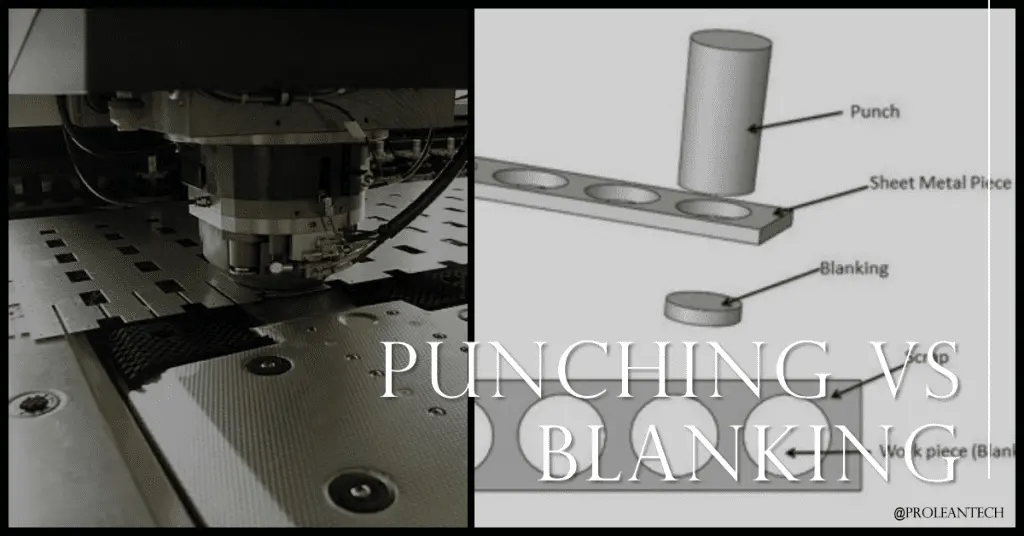
鈑金沖孔 沖孔和落料是金屬成形中兩種常用的技術。沖孔使用沖床在金屬板上沖出孔洞,而落料則使用模具將金屬切割成特定形狀。選擇哪種技術取決於多種因素,例如所用金屬的類型、所需的精度以及最終的加工效果。例如,沖孔通常用於在金屬板上沖孔,而落料則更常用於從金屬板上切割零件。儘管兩者有所不同,但世界各地的製造商都廣泛使用這兩種技術。
需要根據您的圖面加工孔或槽嗎?請查看我們的 鈑金沖壓服務,然後 請求報價 包括材料、厚度和數量。
本文 深入研究沖壓和落料的複雜工作原理,全面了解其應用和限制。
基本機制:了解沖壓和落料
Piercing and blanking share punch-and-die shearing. Select the route by which material must remain in the part and by the required geometry, material, tooling and demand.
沖孔是在工件上形成孔的過程。這是透過對材料施加剪切力來實現的。一種稱為沖頭的工具被強制穿過材料並進入模具,這是一種專門設計的工具,可在另一側支撐工件。
衝壓力學
沖孔加工流程如下:
- 工件放置在沖模上方,沖模旨在支撐工件並為沖頭推入提供位置。
- 然後用力將沖頭穿過工件。沖頭的鋒利邊緣剪切材料,形成一個孔。
- 廢料(由沖頭去除的材料)被丟棄。
消隱的原理
沖裁是從材料中切割出所需形狀的過程。毛坯或切下的零件被保留並通常進一步加工。
沖裁過程如下:
- 與沖壓類似,工件放置在模具上。然而,在這種情況下,模具的形狀要與所需的毛坯相匹配。
- 沖頭的形狀也與所需零件相似,它被強迫穿過材料。
- 毛坯與工件的其餘部分分離。剩餘材料,通常稱為纖維網,通常被丟棄或回收。
下表概述了沖孔和落料機制的主要差異:
| 過程 | 機械學 | 結果 |
|---|---|---|
| 打洞器 | 沖頭被迫穿過工件進入模具,形成一個孔。 | 孔是期望的結果,廢料被丟棄。 |
| 落料 | 形狀像所需零件的沖頭被強制穿過材料,將毛坯與工件的其餘部分分離。 | 坯料就是所需的結果,而纖維網則被丟棄或回收。 |
評估優點與限制:沖孔與沖裁
沖壓的優點
- 速度: 沖床可以快速打孔,非常適合大規模生產。
- 多功能性: 沖孔可以打出各種形狀和尺寸的孔,為各種設計提供彈性。
- 粗糙邊緣: 沖孔通常會留下毛邊或粗糙邊緣,需要額外處理。
- 材料厚度: 沖壓的有效性隨著材料厚度的增加而降低。
沖壓的局限性
- 沖壓的限制之一是它可能會留下毛邊或粗糙的邊緣,需要額外的處理。另一個限制是其有效性隨著材料厚度的增加而降低。
- 粗糙邊緣: 沖孔通常會留下毛邊或粗糙邊緣,需要額外處理。
- 材料厚度: 沖壓的有效性隨著材料厚度的增加而降低。
消隱的優點
- Precision: Achievable dimensions depend on tooling, clearance, material, wear and inspection datums, rather than the operation name alone.
- Material use: Yield depends on nesting, part layout, strip carriers and scrap margins; retaining the blank does not automatically reduce waste.
消隱的局限性
- Speed: Stroke rate and throughput depend on tooling, part geometry, handling and the production route. Blanking is not inherently slower than piercing.
- Complexity: Tool geometry and material behavior determine feasible outlines. Intricate blanks may need staged tooling or a different cutting process.
下表總結了沖孔和落料的優點和限制:
確定適合您的專案的正確流程
為您的金屬成型需求選擇正確的製程取決於多種因素,包括材料、複雜性、數量和所需的精度等級。在這裡,我們提供詳細的指南,幫助您做出明智的決定。
選擇沖孔和落料時要考慮的因素
- Material: Grade, thickness and strength affect both piercing and blanking force, clearance and tool life.
- Quantity: Compare setup, tooling investment, hit count and repeat demand for the required geometry; quantity alone does not determine accuracy.
- Geometry: Identify whether the controlled feature is an internal opening or an external blank profile. A part can require both operations.
- Finishing: Both operations can leave rollover, a burnished zone, fracture and burrs. Specify the required edge condition and secondary work.
下表提供了選擇正確流程的簡要指南:
| 決定 | Piercing / punching | 落料 |
|---|---|---|
| Retained material | Sheet surrounding the opening | Cut-out blank |
| Controlled geometry | Hole or slot and its position | External profile of the retained blank |
| 材料和數量 | Review grade, thickness, force and tooling | Review grade, thickness, force and tooling |
| Edges and acceptance | Specify burr, dimensions and inspection datums | Specify burr, dimensions and inspection datums |
立即嘗試 Boda!
精準度比較:沖孔與沖裁
沖壓和落料都是金屬成型工藝,具有不同的精度等級。在這裡,我們深入探討兩者在準確度上的比較。
沖孔精度
沖孔是一種多功能工藝,可以打出各種形狀和尺寸的孔。然而,沖孔的精確度會受到以下幾個因素的影響:
- 材料厚度: 材料較厚時,沖孔精度會降低。打孔所需的力可能會導致較厚的工件變形。
- 毛刺: 沖孔通常會留下毛邊或粗糙邊緣,需要額外的精加工過程來去除。
消隱精度
沖裁以其精確度和邊緣的高品質而聞名。影響消隱準確度的關鍵因素包括:
- Edge quality: Blanking can leave a fracture zone and burr. Fine blanking is a specialized route and should not be confused with ordinary blanking.
- Precision: Achievable dimensions depend on tooling, clearance, material, wear and inspection datums, rather than the operation name alone.
應用比較
沖孔和落料的應用在不同產業中差異很大,反映了它們獨特的功能和特徵。
沖壓的應用
當工件上需要多個孔時,通常使用沖孔。它經常用於以下行業:
- 施工: 用於在鋼樑或鋼板上打孔。
- 汽車: 用於在車身零件或零件上打孔。
- 電子產品: 用於在金屬外殼上製作通風孔
消隱的應用
當最終產品需要高精度時,通常使用沖裁。它常用於以下行業:
- 電子產品: 用於建立精確的組件,例如連接器或端子引腳。
- 汽車: 用於生產墊圈或墊圈等高精度零件。
- 航空航天: 用於製造需要高精度和乾淨邊緣的零件。
Boda Edge:掌握沖壓與落料
在提供高品質、高效且多功能的金屬成型服務方面,Boda 在業界脫穎而出。憑藉沖壓和落料流程的專業知識,我們提供量身定制的解決方案,以滿足每個專案的獨特需求。
版面設計使用 鈑金沖壓服務 for hole- and slot-focused component inquiries. Describe the full part, including any external profile, bends, finish and inspection requirements.
For repeated blanking and forming with dedicated tooling, review 金屬沖壓服務. Submit the drawing and demand through the 報價頁面 so the route and acceptance scope can be evaluated.
結語
Piercing and blanking share a shearing mechanism but retain different portions of the sheet. A single part may need both. Select tooling and inspection around the required opening or blank profile, then compare complete manufacturing routes.
常見問題
沖孔和落料的主要差異是什麼?
主要區別在於所需的最終產品。在沖孔中,孔是所需的產品,而在沖裁中,切出的部分是所需的產品。
沖孔落料哪個比較快?
Neither is inherently faster. Compare the actual tool layout, stroke sequence, material, handling and order quantity.
沖孔和落料可以使用哪些類型的材料?
這兩種工藝均可用於多種材料,包括鋼、鋁、黃銅和銅等各種金屬,以及塑膠和複合材料。材料的選擇取決於項目的特定要求。
Boda在沖孔和落料中扮演什麼角色?
Boda reviews drawings for 鈑金沖壓服務 以及 金屬沖壓. The quotation defines the tooling route, dimensions, inspection and finished-part scope; no universal machine or precision claim applies.